Persian cats are among the most popular cat breeds due to their adorable appearance, especially their long, thick coats and distinctive facial features.. In addition to their appearance, Persian cats are also known for their calm, gentle nature and tendency to form close bonds with their owners.
However, owning a Persian cat requires special attention, particularly regarding coat care, hygiene, nutrition, and health. This care becomes even more important when raising Persian kittens, especially during the newborn stage.
So, what are the characteristics of Persian cats, and how do you properly care for a newborn Persian kitten? Check out the following guide!
Getting to Know the Persian Cat: A Long-Haired, Affectionate Breed
Persian cats are one of the most widely recognized cat breeds due to their unique physical characteristics. This breed originated in the region of Persia—now known as Iran—and has since evolved into one of the most popular pet cat breeds worldwide.
The most easily recognizable feature of Persian cats is their long, thick fur, which requires regular grooming. Additionally, Persian cats generally have a compact body, a round head, and a distinctive facial structure, with variations in nose shape.
In terms of temperament, Persian cats are known to be relatively calm and gentle, and they often enjoy receiving attention from their owners. However, every cat has a distinct personality, so individual temperaments may vary.
Because of their long fur and facial features, Persian cats require more regular grooming than some short-haired cats. Brushing, eye and face cleaning, proper nutrition, and health checkups should all be part of their care routine.
Types of Persian Cats
In Indonesia, Persian cats are often described based on facial shape, coat characteristics, and color patterns. Some types commonly recognized by cat enthusiasts include:
1. Peaknose Persian

The Peaknose Persian has a very flat face, with a short nose positioned close to the eyes. This feature gives its face a round and distinctive appearance.
Because of its flat face, the eyes and face of the Persian Peaknose require extra attention when it comes to hygiene. The area around the eyes is more prone to tears or dirt, so it needs to be cleaned regularly using safe methods.
2. Medium Persian

Medium Persians generally have a longer nose than flat-faced Persians. Their faces also tend not to be too flat.
They still have long fur and requires regular brushing to help prevent matting and tangling.
3. Flatnose Persian

The Flatnose Persian is characterized by a very flat face with a short nose. Its distinctive facial structure is one of the features that makes this type particularly eye-catching.
Owners need to pay attention to the cleanliness of the face and eye area. In addition, respiratory health should also be monitored, especially if the cat shows signs of discomfort or difficulty breathing.
4. Himalayan Persian

Himalayan cats have long coats similar to those of Persian cats, along with the distinctive colorpoint pattern that is its hallmark. The face, ears, legs, and tail are generally darker in color than the rest of the body.
Like Persian cats, Himalayan cats also require regular coat care to keep their fur clean and tangle-free
How to Care for a Persian Cat
Caring for a Persian cat isn’t just about its appearance; it’s also essential for maintaining its health and comfort. Here are some routine care tips.
1. Brush Their Coat Regularly
The long, thick fur of Persian cats is more prone to matting than short-haired cats. Therefore, regular brushing is important to help reduce shedding and prevent the formation of mats or clumps of fur.
Use a comb suitable for cats and brush gently so as not to make the cat feel uncomfortable. Also pay attention to areas that are more prone to tangles, such as behind the ears, the neck, the armpits, and around the legs.
2. Maintaining Eye and Face Hygiene
Persian cats, especially those with flatter faces, may develop tear staining, which can cause discoloration around the eyes. Gently clean this area using pet-safe products. Avoid using random cleaning products, especially those not intended for cats.
3. Providing a Balanced Diet
Nutrition is one of the key factors in maintaining a cat’s health. Nutritional needs may vary based on age, physical condition, and stage of growth.
Make sure the food you provide meets your cat’s nutritional needs and is given in appropriate portions. For kittens, nutritional needs must also be adjusted according to their stage of growth.
4. Maintaining a Clean Environment
A clean environment helps ensure your cat’s comfort and health. Clean their bedding, food and water bowls, and litter box regularly.
Also, make sure your cat has a comfortable, dry resting spot away from direct drafts..
5. Schedule Regular Health Checkups
Health checkups help owners understand their cat’s condition and detect potential health issues early on. Don’t hesitate to consult a veterinarian if your cat shows changes in behavior, appetite, coat condition, or other unusual symptoms.
For a more comprehensive guide to cat care, Pet Pals can also check out “How to Care for Kittens So They Grow Up Fast and Stay Healthy.”
Guide to Caring for Persian Kittens
Caring for Persian kittens requires extra attention because they are still developing and are not yet able to regulate their body temperature and other essential functions as effectively as adult cats.
At this stage, owners need to ensure that the Persian kitten’s basic needs are met—from nutrition, warmth, and hygiene to monitoring its health.
Some important things to keep in mind include:
1. Meeting the Nutritional Needs of Persian Kittens
Nutrition is a key factor in supporting the growth of Persian kittens. In the early stages of life, kittens should ideally receive milk from their mother’s milk provides essential nutrients during this critical stage of growth.
If the mother is unable to nurse or if there are specific circumstances, consult a veterinarian to determine the appropriate nutritional alternative. Avoid giving cow’s milk or food indiscriminately, as a kitten’s nutritional needs differ from those of humans.
2. Establishing a Feeding Schedule
A kitten’s nutritional needs change as it grows. Very young kittens require a different feeding regimen than those that are beginning the weaning process.
Therefore, the feeding schedule and type of food should be adjusted according to each kitten’s age and condition. If a Persian kitten has special needs, a veterinarian can help determine an appropriate feeding regimen.
3. Maintaining Body Temperature and Comfort
Newborn Persian kittens are not yet able to regulate their body temperature properly. Therefore, keeping their environment warm and comfortable is very important.
Their sleeping area should be dry, clean, and protected from direct drafts. If using an additional heat source, ensure the temperature is safe and that the kitten has enough space to move away if it gets too hot.
4. Maintaining Hygiene and Coat Care
Hygiene is also important from a very young age. However, grooming should be done gently and tailored to the kitten’s age.
Avoid anything that might cause the kitten to get cold. If there is dirt on its body or fur, clean it carefully using the appropriate method.
The Importance of Nutrition for Persian Kitten Growth
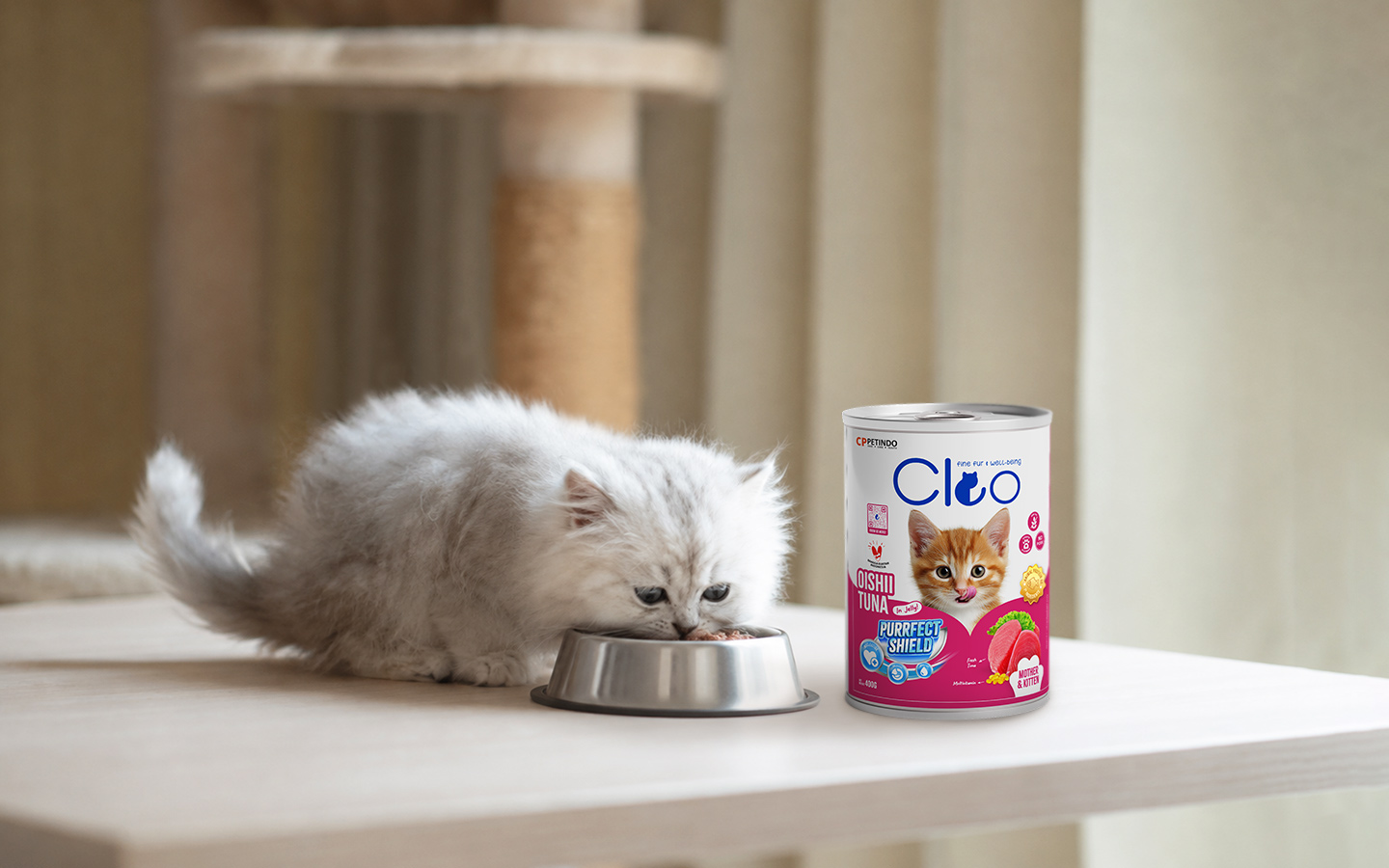
Providing age-appropriate nutrition is a crucial part of supporting the growth of Persian kittens. A kitten’s nutritional needs will change as it grows older, especially when it begins the transition from its mother’s milk to kitten food.
Once the kitten is ready to transition to solid food, owners can choose a food formulated to meet the nutritional needs of both mother cats and kittens, following the feeding instructions on the package. One option to consider is Cleo Oishii Tuna for Mother & Kitten (Canned).
However, for newborn Persian kittens, the priority should be ensuring that they receive their mother’s milk whenever possible. Providing supplemental food or milk substitutes should be based on the kitten’s age and condition and should follow a veterinarian’s recommendations when necessary.